
The ALC was able to say with confidence to Government, ‘if you come here and roll out the RtB, this is what our community wants.’


Next Project
Groote Archipelago Housing Programme
Warnindilyakwa Nation
Room-to-Breathe
For remote Aboriginal communities in the Northern Territory, overcrowding negatively impacts their quality of life, leading to intense feelings of discomfort and loss of control over their household environment.
Communities recognised a fundamental mismatch between existing housing designs and their lived reality, where occupancy levels fluctuate, and complex cultural protocols shape how families use their homes. They wanted their housing to offer appropriate spatial arrangements and address specific privacy and cultural protocol challenges.
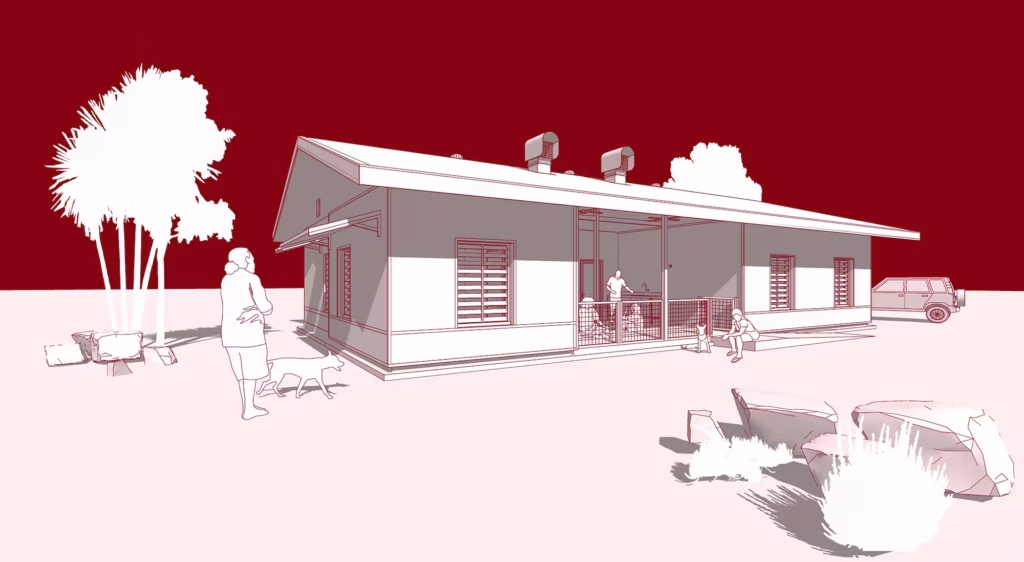
The Room-to-Breathe program was devised in response to repeated recommendations to shift the focus from building new houses to improving the existing housing stock. The program focuses on targeted renovations informed by consultation and co-design with tenants. This approach is unique in state-subsidised housing programs.
Room-to-Breathe is underpinned by the principles of Local Decision Making (LDM) and genuine partnership between community, The Fulcrum Agency, and the Northern Territory Government. Tenants are active participants rather than passive recipients.
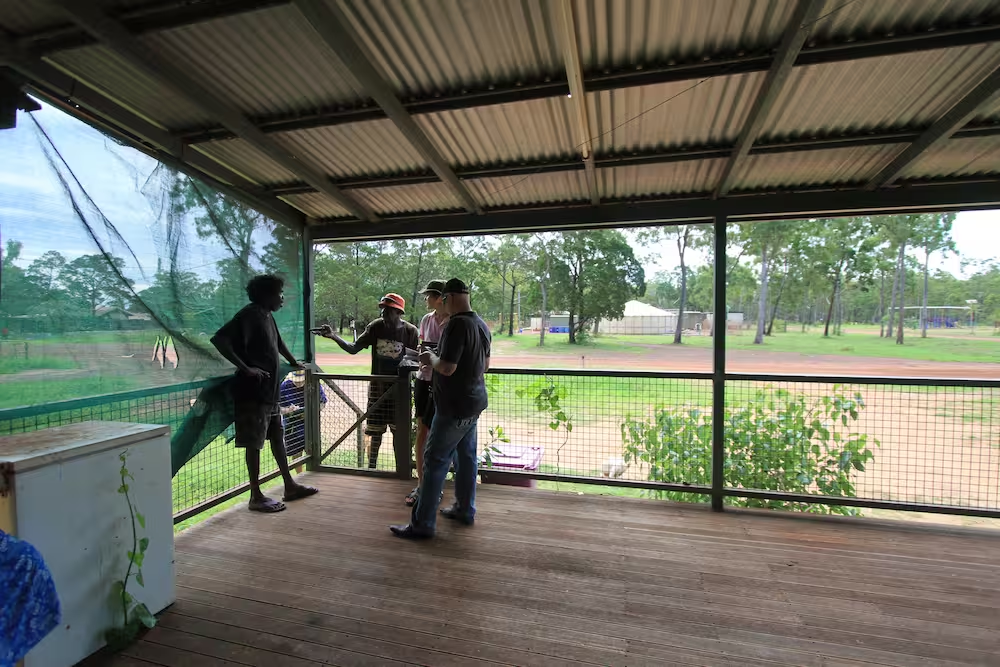
From the outset, the partnership emphasised deep listening and observation. We discussed everything from living patterns to household composition, stress points, and what people liked or didn’t like about their homes and communities. We listened for the ‘why’ behind people’s choices, understanding the reasons why people sat in certain places, which sides of houses became too hot, and how spaces were being used.
We sketched as people spoke, allowing tenants to test ideas around space, access, travel paths and privacy. The iterative approach resulted in housing improvements that people genuinely appreciated because they had been involved in shaping them.
The community-led approach brought practical outcomes, including bathrooms that addressed both cultural protocols and occupancy ratios, targeted additions and alterations that improved functionality, and spatial arrangements that supported both privacy and community connection.
Most significantly, the process itself became an outcome, documented in a set of comprehensive guidelines that outline how to assess overcrowding levels in community housing. The guidelines provide a standardised consultation process to ensure meaningful tenant participation throughout the design phase and clearly define program parameters. This structured approach will enable the program to be implemented across 70 communities over the next decade.
Room-To-Breathe’s success extends far beyond improved housing outcomes. The program has strengthened communities by building their capacity in design thinking and decision-making processes. Research partnerships with universities have emerged to study the effectiveness of tenant-designer collaborations, creating a feedback loop where community knowledge continuously informs best practices in remote housing delivery.
| Location | Northern Territory |
| Partners | NT Government, Anindilyakwa Land Council |
| Project Type | Housing Strategy |
| Completion | 2022 |
| Project Team | Kieran Wong, Heather MacRae, Akira Monaghan |
