
Credit: Bo Wong
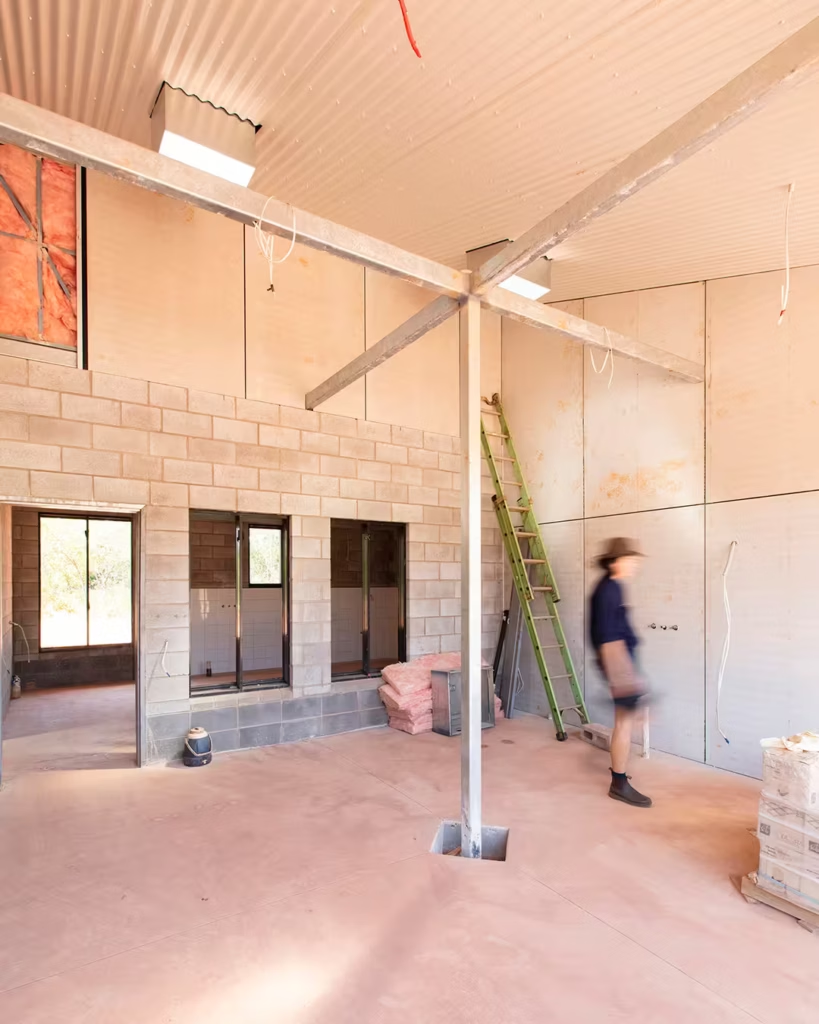

The houses don’t look like standard housing – they’re elegant while fitting perfectly within the local context.


Next Project
Maningrida Housing
Various
Groote Archipelago Housing Programme
The Groote Archipelago Housing Programme (‘GAHP’) was the culmination of many years working with the Anindilyakwa Land Council to improve the lives of the Indigenous population on the Groote Archipelago through better-designed housing.
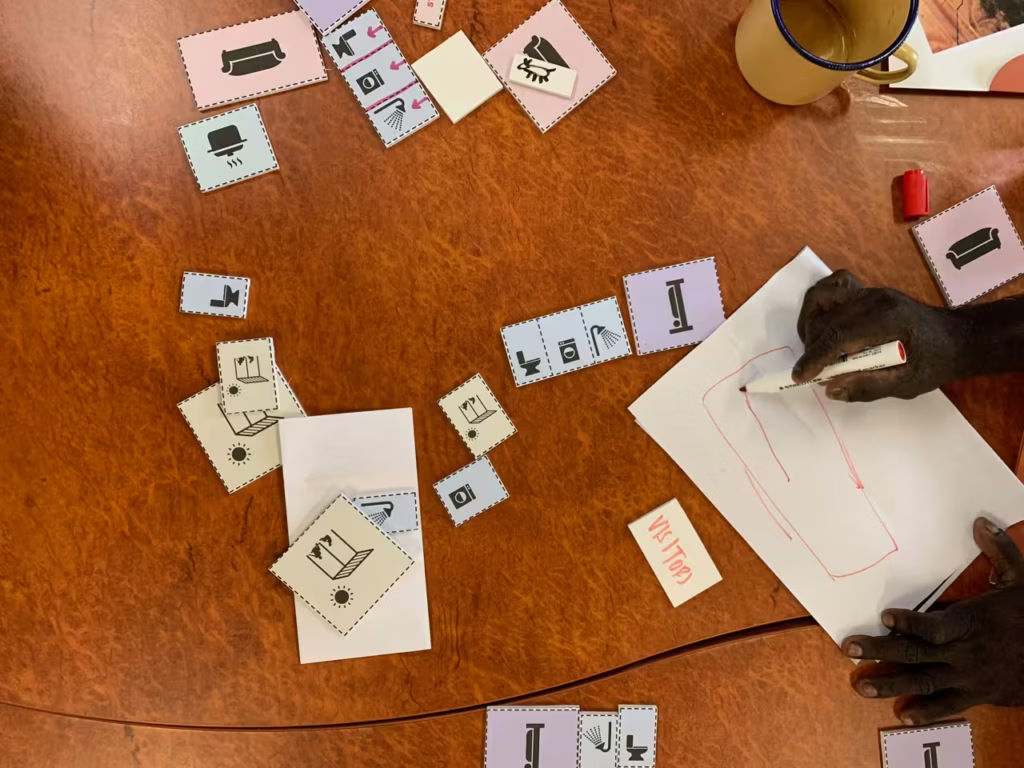
Through genuine partnership, the community developed a better understanding of the complexities of the built environment and took active leadership in designing their housing. Community members guided every stage of the process – from lot allocations through to specific design decisions to final handover – ensuring the houses supported physical health and cultural wellbeing.
Cherelle Wurrawilya
Board Member, Anindilyakwa Land Council
GAHP consists of 50 houses built across seven communities, designed following the principles outlined in the Groote Housing Guide:
- Construction must be supervised, and post-occupancy assessments conducted to ensure homes meet residents’ needs. Local contractors should be used where possible, with maintenance regimes supporting local employment.
- Healthy Places to Live: The most important aspect of housing is that it’s physically safe to live in. Groote housing supports healthy living for everyone, including people living with a disability or Machado-Joseph Disease, Elders and young children.
- Culturally Appropriate: To minimise stress and provide a supportive platform for cultural practice, Groote houses must address the unique cultural needs of their residents.
- Of Many Types: Groote housing needs to provide choice and flexibility by offering a diverse selection of housing sizes, types and construction methods.
- Built Properly: Groote housing must meet or exceed relevant construction codes, including Australian Standards and the National Construction Code, ensuring durability and reducing long-term costs and maintenance.
Instead, we looked to the past and studied the work of others with vast knowledge in this space – from CAT to Troppo to Healthabitat. Our approach was grounded in proven principles and adapted for contemporary community needs.
Cultural Responsiveness
We addressed the cultural factors that often lead to crowding stress by designing bedroom clusters on opposite sides of the house, giving each cluster its own bathroom. We embraced the tarp! Protected verandas provide additional sleeping areas for visitors, while non-structural columns and beams enable the creation of temporary walls.
Adaptable housing plans allow for fluid occupation and the potential for changing family structures. Families can expand and contract their living spaces as needed, accommodating visitors and extended family members while maintaining privacy and reducing stress.
Climate Adaptation and Comfort
We designed flexible, modular plans that respond to lot orientations and local breeze patterns. We added insulation to stabilise temperatures, help to prevent mould and allow air conditioners to operate more efficiently. Air conditioners are included in the base design, ensuring they are properly installed and can be maintained over time.
Durability and Maintenance
We used concrete blockwork for its longevity, ease of maintenance and adaptation, and superior thermal comfort. Robust detailing, careful contract administration to ensure quality construction, and thoughtful fixture selections combine to reduce wear and tear on buildings. This approach reduces long-term maintenance costs and ensures homes remain functional and comfortable for years to come.
Economic and Community Development
Training residents in construction and maintenance has had a positive ripple effect through the community. Beyond the immediate economic benefits, families now have access to skilled tradespeople nearby, and new career pathways have opened for local workers.
Community-Centred Process
We spent time talking through each plan, learning from the community what might work and what wouldn’t. Every design decision was tested against local knowledge and cultural needs, and the result is housing that reflects the community rather than being imposed from outside.
| Location | Warnindilyakwa Country |
| Partners | Anindilyakwa Land Council, Anindilyakwa Housing Aboriginal Corporation, GEBIE Civil & Construction |
| Project Type | Housing |
| Completion | Ongoing |
| Project Team | Kieran Wong, Heather MacRae, Akira Monaghan |
